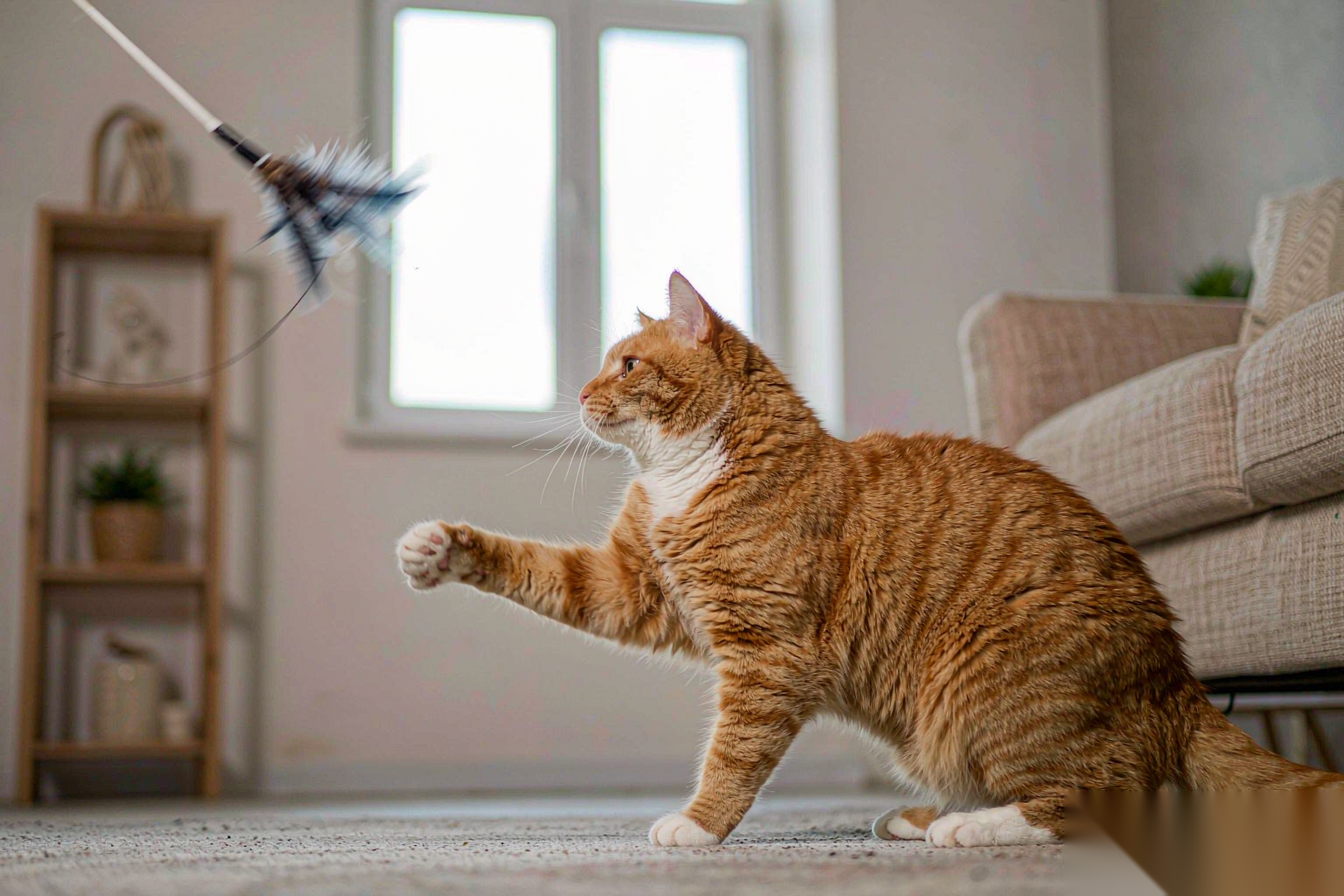
Almost every "my cat is bored" problem is actually a novelty problem. Cats are not under-stimulated by the quantity of toys in a house; they are under-stimulated because the toys stopped being new. A rack of twelve ignored toys is not enrichment — it is furniture.
This is the single most useful thing we learned testing with 200 households before launching, and it changed how we design toys.
Why the toy stops working in week two
Prey drive is triggered by unpredictability. A toy that moves the same way every time becomes predictable within roughly 40 repetitions, which is often two or three sessions. After that, the cat is not bored of the toy — it has simply solved it.
Predictable movement is the same as no movement, after a week.
What actually works
- Short sessions, twice a day. Ten minutes in the morning and ten at dusk — roughly when a cat's natural hunting windows are. A single hour-long session is less effective than two short ones.
- End on a catch. Always let the cat win at the end. A session that ends without a capture teaches frustration, not satisfaction.
- Rotate, don't accumulate. Two toys available, four in a drawer. Swap weekly. This costs nothing and outperforms buying more.
- Vary the movement curve. Pause for three seconds mid-drag. The pause is what makes a cat stalk; the drag alone makes it watch.
The three-minute reset
If your cat has gone flat on a toy, this usually revives it in under a week:
- Put the toy away entirely for three days
- Bring it back in a new room
- Play for four minutes, ending with a capture
Novelty is contextual, not absolute. A cat that ignores a toy in the living room will often chase it in the hallway.
When it is not boredom
Three behaviours that look like boredom and are not:
- Over-grooming to the point of bald patches — usually stress or pain, see a vet
- 4am yowling — often hunger or a routine problem, not under-stimulation
- Sudden withdrawal from previously enjoyed play — a classic early illness signal, especially in cats over 8
Enrichment helps a healthy bored cat. It does not fix a sick one.